









On Aug. 15, 2022, we walked into our second period Introduction to Journalism class for the first time. Little did our freshman selves know that the decision to take that class would significantly shape our high school experience, and over the past four years, writing and reporting for the Oracle has grown to become one of our greatest passions.
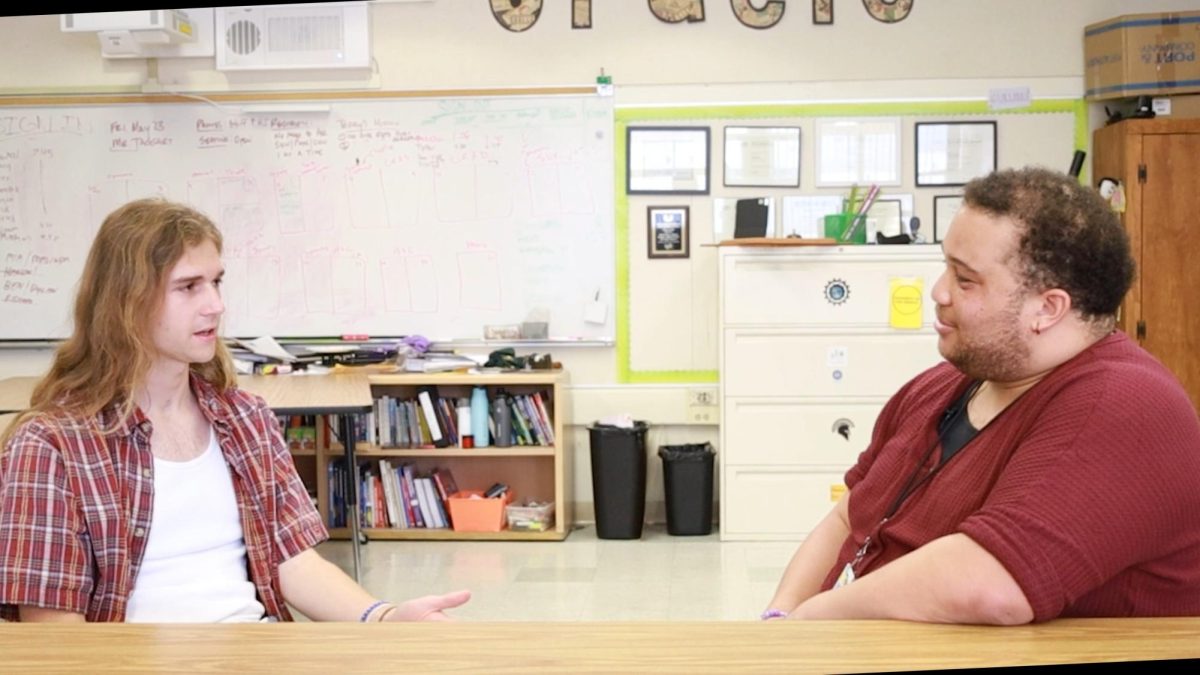
As freshmen joining the Oracle for the first time, it was abundantly clear to us that it was a program that was well loved and filled with students and an adviser passionate about their work. The classroom was decorated and colorful, students across all grades interacted with one another, and work was completed efficiently. During this time, the Oracle was organized into two different classes — an Intro to Journalism class and a production class, referred to as Journalism. This structure created a clear pathway into the program, bringing in groups of students each year who were introduced to journalistic principles before stepping into leadership roles as they progressed. By the time students became editors, they already had a strong foundation in reporting, interviewing, and writing.
For nearly 40 years, the Oracle operated under a similar model, with a dedicated introductory course, consistent advisers, and healthy enrollment numbers that promised future stability. After our freshman year, however, that stability has slowly unraveled.
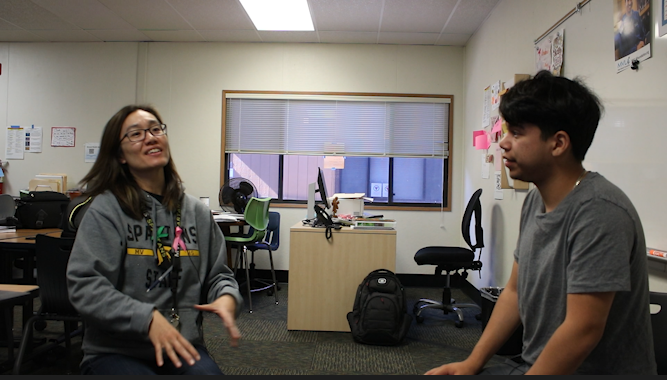
Over our tenure at MVHS, we have taken a journalism class every year — each one under a different name. We have been in five different classrooms and worked with three different advisers. This turnover has been extraordinarily inconvenient and has made it difficult to build consistency, trust, and a clear identity as a program.
No more than three years ago, the Oracle had 39 students. Now, at 25, it reaches slightly over half that number. What used to be a straightforward progression through the journalism program has been replaced by the Digital Communications pathway. The initial journalism course is now called Digital Communications II, which is dual-enrolled with a business class at Foothill College, while Digital Communications III serves as the advanced class and is a dual-enrollment photojournalism class through Foothill College. The DCII course, according to current students, does not adequately teach a journalism curriculum to the standard that the previous Introduction to Journalism course did. In addition, this current structure does not give Oracle a dedicated class. At the beginning of this year, we “stuffed” Oracle into DCIII, a compromise so that we could have all returning members in the same class. While these specific challenges have only been this year, and cited as “growing pains,” the repeated cycle of changing structure over the years has had a long-lasting impact on our program.
The differences between the structures of the original intro to production class sequence and the new CTE pathway are striking. Under the original structure, intro students only contributed to the paper for three cycles, but now DCII students contribute to five. While this may appear positive, it removes nearly three months of critical time that was previously entirely dedicated to teaching students journalism basics. So, without a clear, labeled journalism-focused entry point, underclassmen end up learning journalism informally from student editors with no teaching experience instead of through a consistent curriculum. This has had negative effects on the quality of our paper as well as the long-term longevity of the program as a whole.
Additionally, excitement and investment within Oracle have decreased. From our perspective, many students in the program view every aspect of the Oracle as a chore, seeing production nights, article writing, and collaboration as obligations rather than opportunities to improve. What once felt like a close-knit and energetic classroom has become harder to sustain as uncertainty surrounding the program continues to grow.
Some of that uncertainty stems from the relationship between the Oracle and MVHS administration. As co-editors-in-chief, we think about the impact of every story we pitch, but mostly we think about how it could be negatively received by administration. There is a constant awareness of a relationship that already feels strained. At times, that creates hesitation where we think about what feels safe to publish instead of focusing solely on what deserves to be reported.
This tension has not come out of nowhere. The lawsuit, Gomez v. Glazer, centered on a 2023 Oracle article about sexual harassment that was allegedly censored by MVHS administration, bringing our program into a broader conversation about student press rights. It drew attention from both local student publications and major media outlets and led us to bring the Oracle to a national stage, where we discussed our experiences outlined in the lawsuit.
This uncertainty also stems from recent structural changes. The Oracle has functioned under a Career Technical Education pathway since 2024. MVHS administration has pointed to CTE funding as a reason for shifting journalism classes under the “digital communications” umbrella, as well as turning them into dual enrollment classes. However, those changes do not reflect what we, student journalists, actually want. We should not have to think about whether our class aligns with funding and curriculum requirements; we should be focused on reporting, writing, and editing. Instead, the dual enrollment structure has introduced additional assignments beyond our articles, often adding hours of extra work that takes time away from the Oracle itself. For example, this year, we had to create “college application videos” for our DCIII class for credit. That is not journalism.
Looking ahead, these challenges may continue. Next year, MVHS administration said they plan to introduce a journalism internship class. The idea of such a course sounds exciting, but in reality, that class will take place during a student’s free period and will not have a dedicated classroom, meaning about half of the program could be working without a consistent newsroom space. It’s unclear how these students will connect with new members, be held accountable without a formal grading system, and stay connected with the returning staff. Journalism depends on collaboration and quick feedback. While there are positive aspects of the internship — students getting credit for production hours, for example — it likely will become harder to maintain the close-knit community and high journalism standard that the Oracle has worked so hard to build.
We do not think the program is beyond repair. But from where we stand as four-year Oracle veterans who have experienced four very turbulent years, rebuilding requires so much more than reassurance. MVHS administration needs to restore a stable pathway into journalism with a clear introductory course. It means committing to a consistent classroom space that students return to year after year, so the program can function as a newsroom. It means reducing unnecessary coursework so student journalists can focus on producing stories. And it means setting boundaries that protect our ability to report while maintaining a working relationship between us and MVHS administration.
At the same time, the Oracle needs students who care about their writing and their role as journalists. As long as there are invested, passionate, strong-willed students, we believe that the program can withstand and adapt to whatever change or obstacle there may be. The solution is simple — foster a community that makes students excited to be a part of.
There are many students and staff at MVHS who care deeply about the Oracle and what it represents for our school. What is missing is consistency. Without that, it becomes harder each year to convince new writers to join and stay. When we, the two remaining students who experienced a full year of Introduction to Journalism, graduate in two months, the program will lose the last students who went through a complete, structured journalism curriculum. Without that foundation being passed down, the gap only widens, and the challenge of rebuilding becomes even harder.
Support student journalism.