












Since 2023, the unhoused population in Mountain View has spiked 56%, compared to an 8% average countywide increase, according to Santa Clara County’s Point in Time Count.
Mountain View is home to 879 homeless individuals as of January 2025. Of these individuals, 722, or 82% of the total homeless population, are currently unsheltered. This means they reside in an unprotected area such as their vehicle, outdoors, or elsewhere.
The rise in houseless population can be attributed to several factors, most notably the area’s high rent and living costs, limited temporary shelters, and an influx of vehicle dwellers from outside the city, according to Mountain View’s PIT Count City Statement.
Currently, the U.S. faces severe debt — a crisis which President Trump aims to battle by cutting and freezing federal funding of social support programs, according to a 2025 article by The Imprint.
Past administrative actions, like withholding school funds, and future budget cuts may put support programs for homeless youth in jeopardy, with many relying on the programs for access to schooling and resources.
“We were allocated a certain amount of money to be able to serve our McKinney-Vento families, and then that funding disappeared and depleted,” Alba Garza, MVLA’s McKinney-Vento Liaison, said. “[We’re] now having to more heavily rely on our nonprofit organizations, and have been highly impacted by federal cutting.”
The McKinney-Vento Homeless Assistance Act is a federal law created to protect the educational rights of homeless youth. Under the act, all school districts have a McKinney-Vento Liaison, who connects students with resources, including tutoring, transportation, and school supplies.
“Under that umbrella, it includes students that are currently doubled up, which would be either sharing their apartment, a room, a living room, or any other dwelling that is not [being paid for in] rent due to their financial situation,” Garza said.
Since the 2024 election, school funding has declined amid frozen funds and potential sweeping budget cuts. According to the National Education Association, nearly $6.9 billion in K-12 education appropriated funds were withheld by the Department of Education in July 2025. This lasted nearly a month and temporarily halted grants which school districts rely on to support students experiencing homelessness.
Additionally, future reductions could impact programs that support homeless and low-income students, according to the Brookings Institution.
Under President Trump’s proposed budget plan for fiscal year 2026, dedicated McKinney-Vento funds for the Education for Homeless Children and Youth program face being grouped into a broader $2 billion block grant. The funds would support EHCY and 17 other educational initiatives.
Originally, $6.5 billion in total would go to the individual programs. Under the consolidated grant, they would receive 70% less. Homeless youth would be left to the decisions of states and schools for fund allocation, as districts would no longer be required to use it on them.
“We try our best to support the students and the families, but unfortunately, sometimes the need is greater than the resources that we can provide,” Garza said.
As such, MVLA’s McKinney Vento program works closely with a variety of nonprofits, including the Community Services Agency. CSA offers aid to many housing-unstable and senior citizens through food programs, rental assistance programs, and case management, stated Tom Myers, executive director of CSA.
“We have all kinds of services that serve all kinds of people, and a wide variety — all ages, all races and ethnicities,” Myers said.
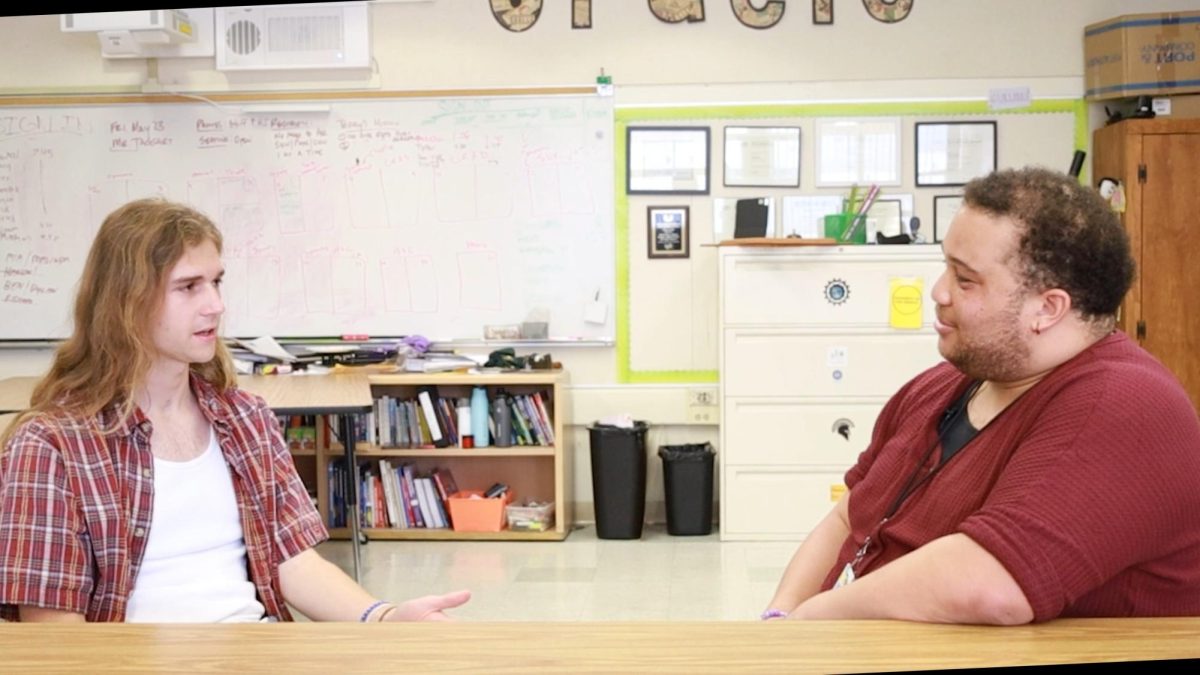
Yet training homeless people to be financially self-sufficient is also important, stated David Ortiz, history teacher at MVHS and a former unhoused student.
“It’s not enough just to house people. You have to give them the opportunity to get a livable job,” Ortiz said.
During Ortiz’s junior and senior years of high school, he recalled working at McDonald’s anywhere from 20 to 40 hours a week. On top of school, he said he found little to no time for other activities.
“I made a lot, but I didn’t make enough for rent,” Ortiz said. “No one would rent to a 16-year-old anyway.”
Ortiz added that the impacts of social stratification were extremely alienating, distancing himself from his peers.
“I think the biggest issues we face are people’s lack of understanding,” Myers said. “People like to paint homeless people into one specific corner and say, ‘This is who we’re dealing with’, and that’s not right.”
Societal impacts on housing-insecure people are significant. People facing housing instability experience elevated rates of depression, anxiety, and emotional distress, according to a study published in the Journal of Public Health (2022).
“There’s a certain stigma that nobody would want to be associated with,” Garza said. “You just feel so much shame that you don’t want to share what you’re going through, and so that’s definitely something students don’t want to talk about.”
Students’ needs are not just academic, Garza added. Rather, providing safety and comfort are key aspects of her role, and they could not be achieved without the web of support from the community.
“I’m just so grateful that our students and teachers and our whole district [are] so dedicated [to] supporting our community mental facilities,” Garza said. “That’s what’s going to make all the difference in the long run, ensuring we create a school environment where everyone feels like they could thrive.”
Myers stated that he encourages marginalized students and others to stay positive.
“I think it’s really, really important for us to remember to not lose hope, to not get cynical, and to just keep up the good fight,” Myers said.